
Project History
The HALC AI Guide began at Hostos Community College as a collaboration between the Hostos Academic Learning Center (HALC) and the Office of Educational Technology (EdTech). In 2024, supported by the IDEAS and ADELANTE grants, the team set out to explore how artificial intelligence could strengthen tutoring in STEM. Early pilots using ChatGPT—conducted without student involvement—tested Socratic questioning, visual scaffolds, and UDL-based accessibility strategies. These experiments revealed strong potential for AI in tutoring but also raised critical questions about privacy, accuracy, and academic integrity.
To meet those challenges, HALC transitioned to CUNY Copilot, a FERPA-compliant platform licensed through Microsoft 365. This ensured that all tutoring activity remained private within the CUNY environment and that no student data would ever be used to train public AI models. With that secure foundation in place, the project turned toward pedagogy. Rather than relying on prebuilt tools, the team asked a new question: What if tutors could design their own AI agents and custom learning apps based on real student needs?
That question shaped the HALC AI Guide. Today, CUNY Copilot serves as a thinking partner for tutors who reflect on their sessions, identify where AI can enhance learning, and build prompts or tutoring bots that align with their individual style.
For more advanced development, tutors also create custom “Vibe Coded” Tutor Apps using Gemini 2.5 Pro in Google AI Studio. Published on GitHub Pages for open access, these lightweight, browser-based web apps run locally and collect no personal data. The result is a growing collection of interactive tools—built by tutors for tutors—that extend classroom learning, model ethical AI use, and reflect HALC’s commitment to human-centered innovation.
Alongside this creative work, HALC developed a microlearning program to prepare tutors for responsible AI use. Each module blends pedagogy and technology, showing how methods like the Socratic approach or the Concrete–Representational–Abstract (CRA) model can be adapted to Copilot. Tutors learn how to balance questioning with explanation, how to request visuals or analogies when students are stuck, and how to use short reflections and checks for understanding to close sessions. The Guide itself functions as a living handbook, with microlearning units that can be combined into personalized learning paths for onboarding and professional growth.
In many ways, the HALC AI Guide complements the Compass of Online Teaching Excellence (COTE)—Hostos’s framework for course quality, accessibility, and digital pedagogy. While COTE supports faculty in designing inclusive and effective online learning environments, the HALC AI Guide extends that same mission to tutors. Together, they represent two sides of the same vision: empowering educators and learning professionals across Hostos to use technology ethically, creatively, and in ways that center human learning.
The HALC AI Guide is more than a training platform—it is a research and mentorship initiative. Student tutors help design and test Copilot agents and custom apps, developing AI literacy while improving the tools they use in practice. Their contributions ensure that HALC’s work reflects the real dynamics of tutoring at Hostos—grounded in inquiry, collaboration, and the human-AI partnership that defines the next chapter of learning support.
Our Mission
At its core, the mission of the HALC AI Guide is straightforward yet firm:
AI in tutoring should amplify human expertise, safeguard student privacy, and give tutors the freedom to design creative, student-centered learning experiences.
Looking Ahead
Looking ahead, our goal is to scale this model. By 2026, we plan to secure external funding, publish our findings, and share our approach across CUNY and beyond. Our commitment to ethics, equity, and creativity is what drives our work and positions Hostos as a leader in shaping the future of academic support.
Our Team
ADELANTE GRANT
Project Leads

Lissette Jourdain Torres
Director
Hostos Academic Learning Center (HALC)

Ana Marjanovic
LMS Administrator/ Instructional Designer
Office of Educational Technology (EdTech)
HALC
Participating Tutors
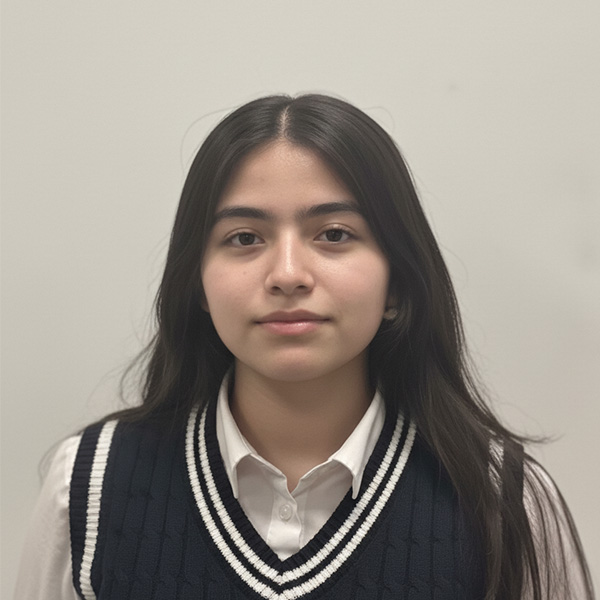
Maria Juarez Garcia
Math Tutor

Edward Hernandez
Math Tutor

Edwin Hernandez
Math Tutor
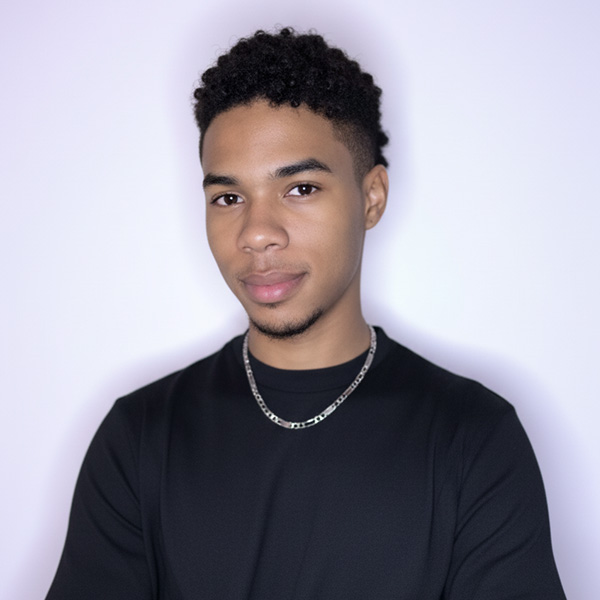
Harlet Lopez
ChemistryTutor

Anthony Cruz Hernandez
Math Tutor

Denisse Feliz
Biology Tutor

